Highlights
Team earns Gordon Bell Prize finalist nomination for simulating carbon at extreme pressures and temperatures
A team employed Summit, the nation's fastest supercomputer, to model the behavior of carbon under extreme temperatures and pressures.
OLCF/ORNL Press Release, November 17, 2021. Read more →
USF physicists selected as finalists for the "Nobel Prize of supercomputing"

A team of computational physicists and computer scientists led by researchers from the University of South Florida has reached a new milestone in supercomputing and was selected as a finalist for the field's most prestigious award.
USF Press Release, November 16, 2021. Read more →
Gordon Bell Finalists Fight COVID, Advance Science With NVIDIA Technologies

Four teams used NVIDIA's accelerated computing and AI platforms in work that won them spots as finalists for a standard Gordon Bell award or a special prize for COVID research — two of them with stunning billion-atom simulations.
NVIDIA Blog, November 15, 2021. Read more →
Lord of the Rings – synthesizing a five-membered ring nitrogen compound
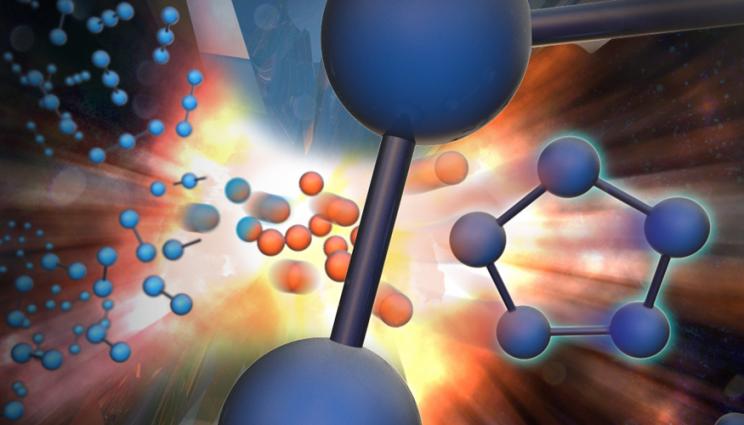
Lawrence Livermore National Laboratory scientists in collaboration with University of South Florida theorists recently reported the synthesis and equation of state of a long sought-after five-ring nitrogen (N5) compound.
LLNL Press Release, December 19, 2016. Read more →
Doubly Shocked: Shock waves in solids can propagate as a single structure made up of two zones with different mechanical properties
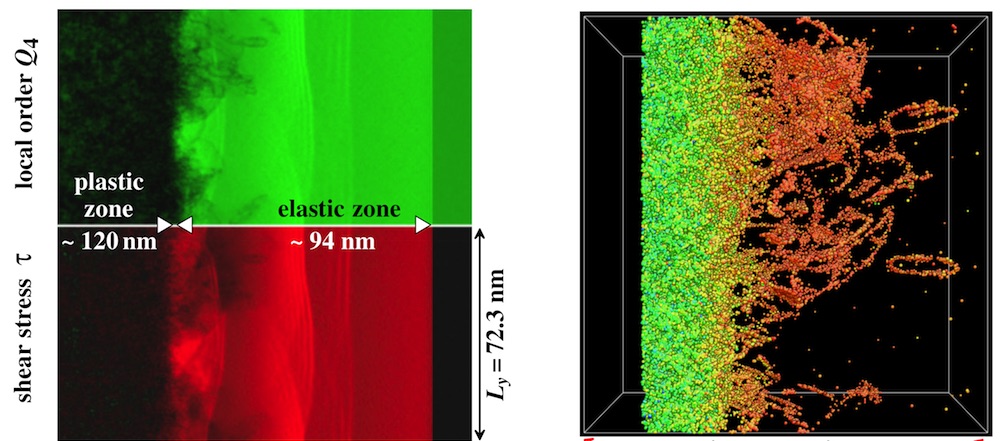
A shock wave is a pressure jump that propagates at supersonic speed. In solids, an impact or other sort of shock can generate two waves: an "elastic" compression wave followed by a separate, slower "plastic" wave that irreversibly deforms the material.
APS Physics News, September 22, 2011. Read more →
Graphene Defects Could Lead to Smaller Electronics
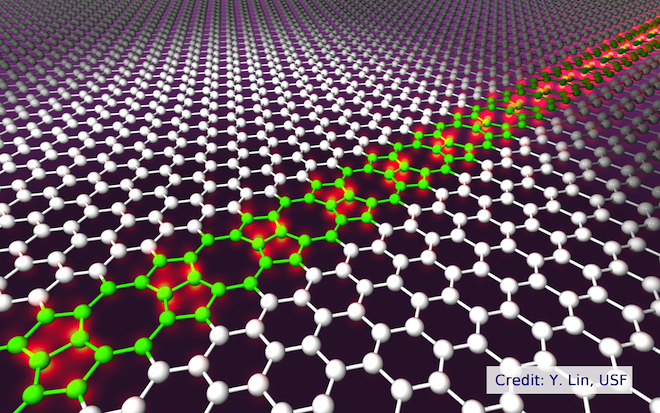
Graphene could someday replace silicon as a semiconductor material and make our chips smaller and faster. Researchers have experimentally realized and theoretically investigated, for the first time, perfect atomic wires in graphene.
Featured in Wired Magazine, April 9, 2010. Read more →
A Tiny Defect That May Create Smaller, Faster Electronics
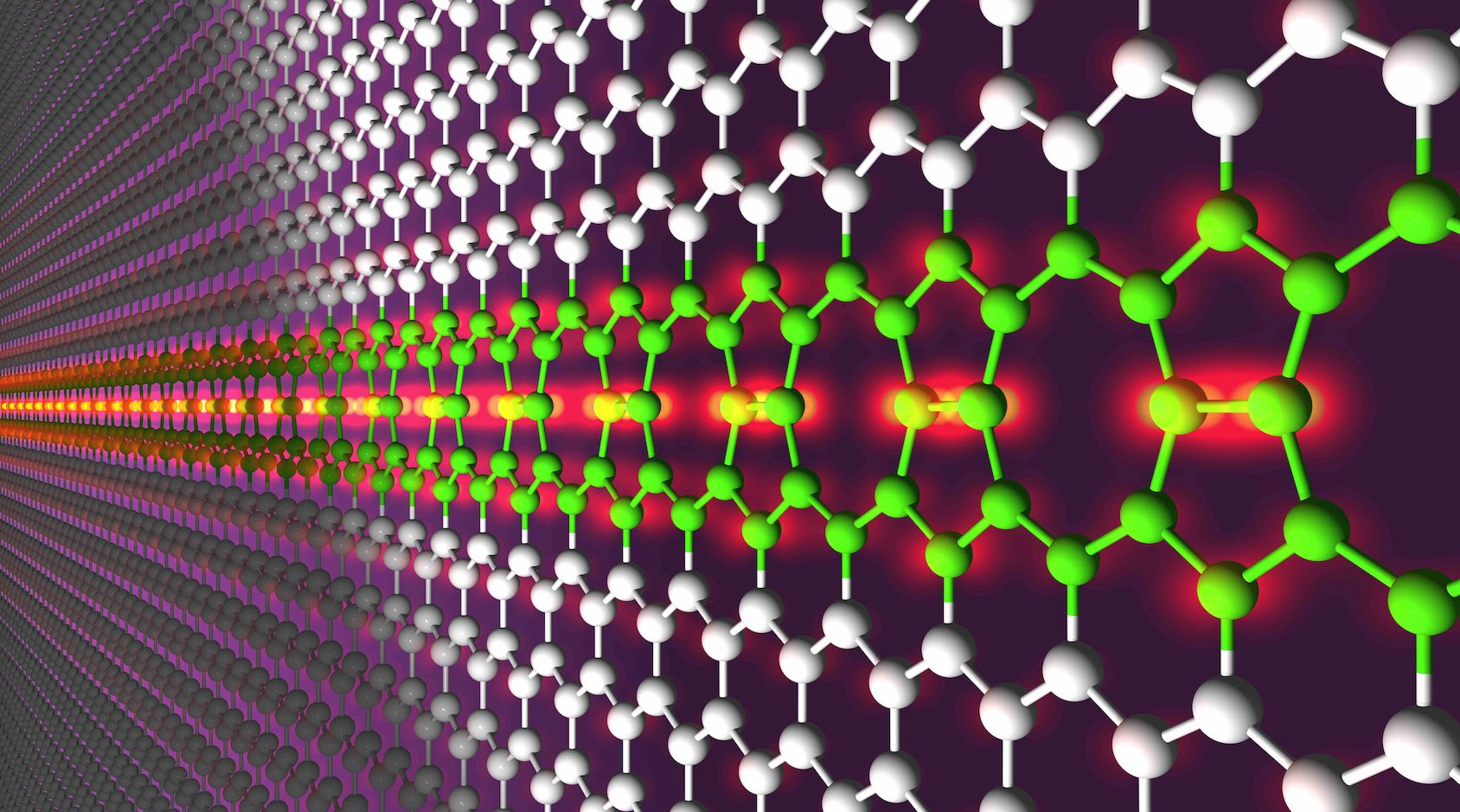
Researchers at the University of South Florida have developed a technique to turn defects in graphene into tiny metallic wires.
NSF Press Release, March 30, 2010. Read more →
Researchers create molecular diode
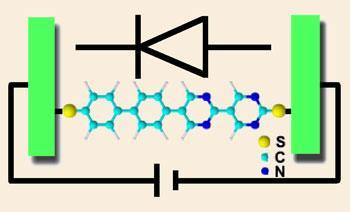
At Arizona State University's Biodesign Institute, N.J. Tao and collaborators found a way to make a key electrical component on a phenomenally tiny scale. Their single-molecule diode is described in Nature Chemistry.
ASU Press Release, October 21, 2009. Read more →
Device Only Atoms Across May Allow Infinitesimal But Powerful Computers
Single-molecule diode may change Moore's law of microchip memory.
NSF Press Release, April 3, 2006. Read more →